When you explore the vibrant world of Egyptian recipes, one dish stands above the rest as the undisputed king of street food: Koshary. This legendary bowl is a masterclass in textural layering, combining earthy grains, tender legumes, and a signature “shattered” crunch that defines the Cairo dining experience.
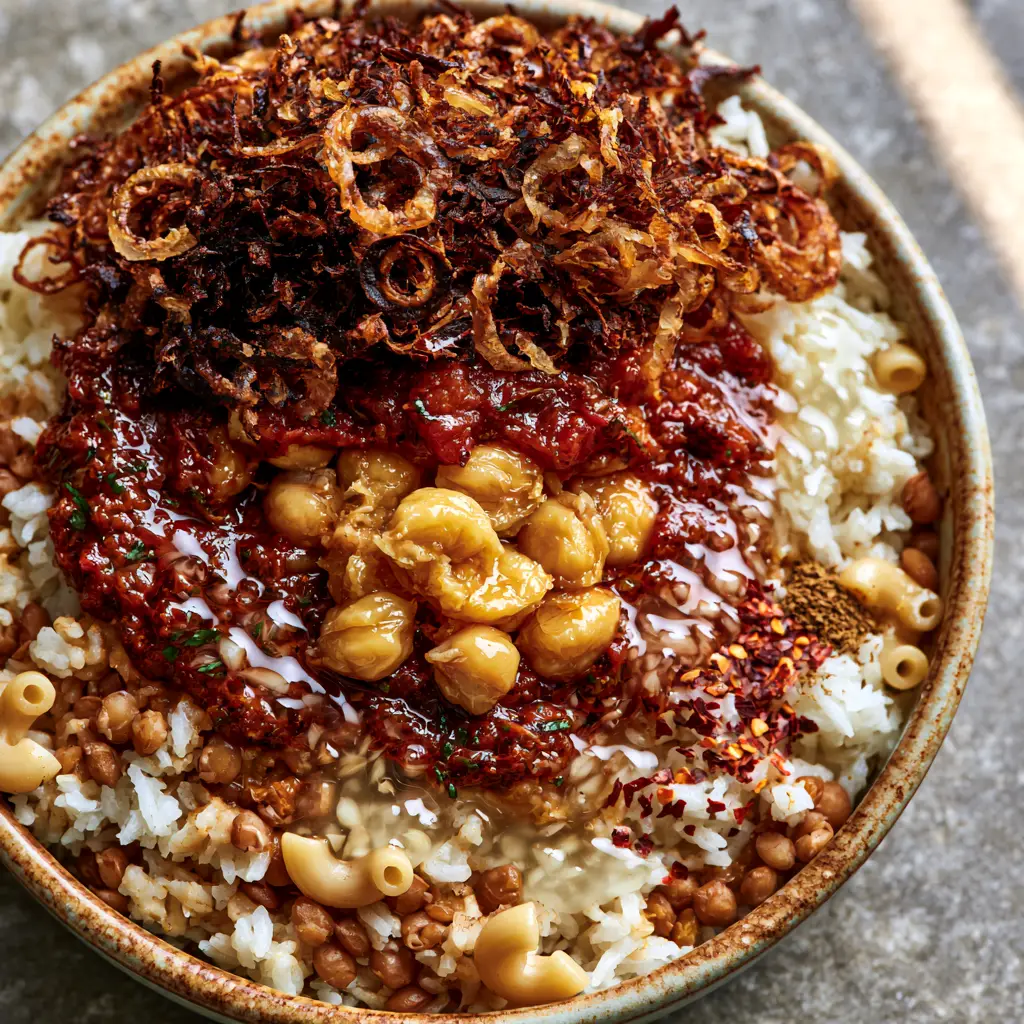
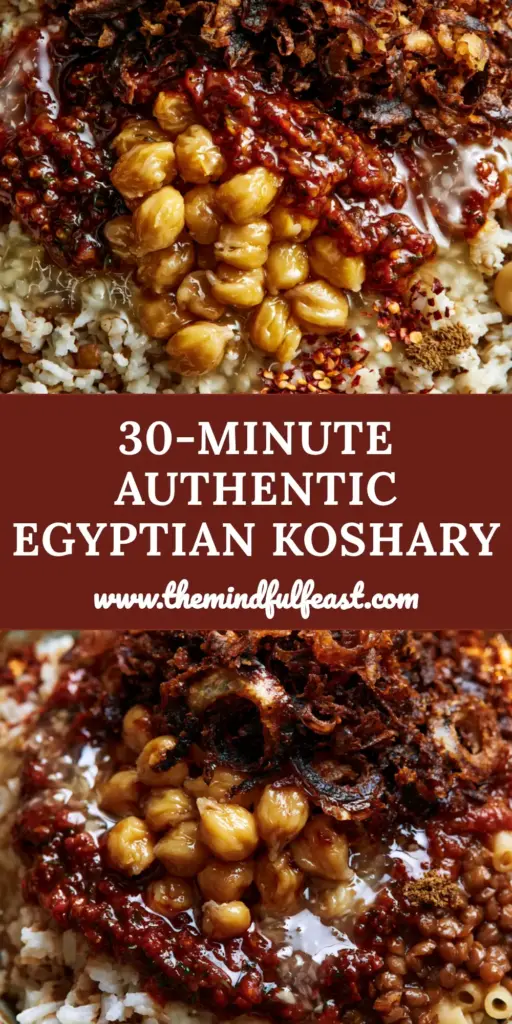
Imagine a rustic ceramic bowl, heavy in your hands, filled with a meticulously textured base of fluffy white rice and tender brown lentils. This isn’t just a meal; it’s a culinary architecture that balances the softness of al dente elbow macaroni with the buttery pop of golden chickpeas, all unified by a thick, glossy red sauce.
In this deep-dive guide, we are recreating the exact visual and sensory experience of a high-end Egyptian eatery. We will focus on the interplay between the deep-red spiced tomato sauce and the glittery, translucent garlic-vinegar drizzle that brings every bite to life.
The Unmatched Appeal of a Perfect Koshary Bowl
- Textural Symphony: Experience the contrast between “shattered” dark-golden onion curls and soft, steamed brown lentils.
- Aromatic Depth: The foundational scent of toasted ground cumin and sharp garlic-vinegar creates an irresistible olfactory hook.
- Visual Vibrancy: The deep-red glossy sauce against the neutral grey of the grains makes this one of the most photogenic Egyptian recipes.
- Nutritional Powerhouse: A complete plant-based protein profile featuring lentils, chickpeas, and grains.
The Essential Pantry for Authentic Egyptian Koshary
To achieve the authentic results seen in professional culinary photography, you must select high-quality staples. The rice must be long-grain to ensure it remains fluffy and distinct rather than clumping into a porridge-like consistency.
Brown Lentils: 1 cup (200g) of dried brown lentils provides the earthy, protein-rich base. Unlike red lentils, these hold their shape perfectly during the steaming process, providing the necessary structure for the bowl.
Long-Grain White Rice: 1 ½ cups (300g) of long-grain rice acts as the neutral canvas. When cooked correctly, each grain remains separate, mirroring the hearty rice bowls found in other global cuisines.
Elbow Macaroni: 1 cup (150g) of small elbow macaroni adds a playful, chewy element. It should be cooked strictly al dente to stand up against the weight of the thick tomato sauce.
Golden Chickpeas: 1 can (15oz/425g) of chickpeas, drained and rinsed, adds buttery richness. These should appear plump and golden, sitting prominently in the center of your ceramic bowl.
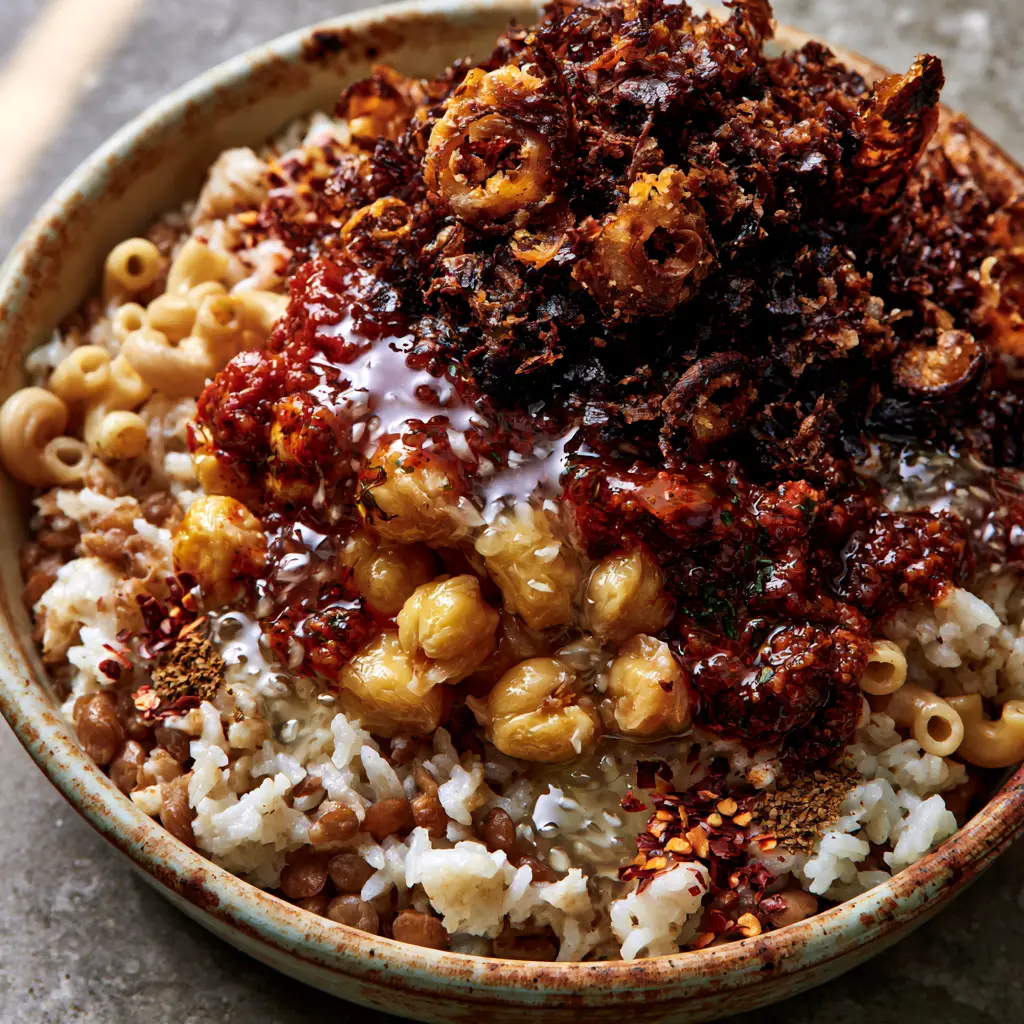
Yellow Onions: 2 large (300g) onions are required for the “Warda” (flowers). These are thinly sliced and deep-fried until they reach a dark-golden, shattered consistency.
Tomato Paste and Puree: 2 cups (480ml) of tomato puree and 2 tbsp (30g) of paste form the glossy red sauce. This sauce needs to be thick enough to show herb flecks and rich texture on the surface.
White Vinegar & Fresh Garlic: 1/2 cup (120ml) of vinegar and 4 cloves (20g) of garlic are the heart of the “Daqqa” sauce. This provides the glittery, translucent drizzle that cuts through the richness of the fried onions.
Spices & Seasoning: 1 tbsp (6g) ground cumin, 1 tsp (2g) dried red chili flakes, and salt to taste. These invisible ingredients are scientifically required to bridge the flavors of the grains and the acidity of the sauce.
Neutral Oil: 1 cup (240ml) of vegetable oil is essential for searing the onions. This oil becomes infused with onion flavor and is later used to toast the rice, a secret step in the best Egyptian recipes.
Must-Have Equipment for Culinary Precision
Achieving the visual perfection described in our blueprint requires more than just ingredients; it requires the right tools. A heavy-bottomed Dutch oven or a rustic ceramic pot is ideal for even heat distribution when steaming the lentils and rice.
For the onions, a mandoline slicer ensures uniform thickness, which is the secret to achieving that “shattered” crunch without burning. A fine-mesh strainer is also necessary for the garlic-vinegar sauce to ensure it remains a translucent, glittery drizzle rather than a cloudy liquid.
Mastering the Art of the Crunchy ‘Warda’ Onion
Achieving the Dark Golden Shatter
Heat your oil in a wide skillet until it reaches 350°F (175°C). Toss your thinly sliced onion curls in a light dusting of flour and a pinch of salt; this absorbs excess moisture and guarantees a crunchier result.
Fry the onions in batches, stirring constantly. Watch for the visual cue: they will transition from translucent to pale gold, then rapidly to a deep, mahogany brown. Remove them just before you think they are done, as residual heat will continue the darkening process.
The Onion-Infused Grain Base
Do not discard the frying oil! This liquid gold is saturated with the essence of caramelized onions. Use 2 tbsp (30ml) of this oil to toast your dry rice grains before adding water; this ensures each grain is coated, resulting in the “fluffy” texture requested in the visual prompt.
Crafting the Glossy Tomato Salsa and Zesty Vinegar Drizzle
The Spiced Tomato Sauce (Salsa)
In a small saucepan, sauté two cloves of minced garlic in onion oil until fragrant but not browned. Stir in the tomato paste to caramelize it slightly, then add the tomato puree, ground cumin, and a splash of vinegar. Simmer until the sauce is thick and glossy, showing visible herb flecks and a deep-red hue.
The Garlic-Vinegar Drizzle (Daqqa)
This is the “glitter” of the dish. Whisk together the remaining garlic, white vinegar, a pinch of cumin, and 1/4 cup (60ml) of warm water. The goal is a translucent liquid that will catch the light and add a sharp, acidic punch to the earthy lentils. For those who enjoy heat, this is where you can infuse your dried red chili flakes.
Professional Secrets for Flawless Egyptian Street Food
- The Starch Wash: Always rinse your rice and lentils until the water runs clear. Removing excess surface starch prevents the grains from becoming gummy, ensuring the “textured mixture” remains distinct.
- Salt Timing: Add salt to the lentils only after they have softened. Salting too early can toughen the skins, preventing that “tender brown lentil” result.
- The Pasta Finish: After draining your al dente elbow macaroni, toss it with a teaspoon of onion oil. This prevents sticking and adds a subtle savory note that mirrors the complexity of top-tier noodle dishes (coming soon).
- Shatter Retention: Store your fried onions in a container with a paper towel and *do not* cover it tightly while they are warm. Steam is the enemy of the crunch.
Storage, Reheating, and Meal Prep Logistics
Koshary is one of the most meal-prep-friendly Egyptian recipes. The grain base (rice, lentils, and macaroni) can be stored together in an airtight container for up to 4 days. However, the components should ideally be kept separate to maintain their individual textures.
To reheat, steam the grain mixture with a tablespoon of water to restore the “fluffy” rice texture. The tomato sauce should be warmed on the stovetop. Never microwave the fried onions; instead, crisp them up in a dry pan for 2 minutes or in an air fryer to regain that shattered, crunchy mouthfeel.
What to Serve with Authentic Koshary
While Koshary is a complete meal, it is traditionally served alongside bright, acidic sides to balance the starch. A side of cucumbers and onions in vinegar provides a refreshing crunch that cleanses the palate between bites of the spiced tomato sauce.
If you are hosting a larger Middle Eastern-themed dinner, consider starting with a light salad or a savory vegetable pie to introduce varied textures before the main event. For dessert, a soft fluffy treat or a simple fruit salad rounds out the meal perfectly.
Frequently Asked Questions about Egyptian Koshary
You can, as they also hold their shape well. Avoid red lentils, as they turn into a puree when cooked and won’t provide the distinct texture required for this dish.
Ensure you use warm water and finely minced garlic. Straining the mixture through a fine-mesh sieve before drizzling will give it that glittery, professional look.
Yes, Koshary is naturally vegan. It relies on a combination of lentils, chickpeas, and grains for protein, making it one of the most hearty plant-based Egyptian recipes.
The secret to the ‘shattered’ crunch is slicing them very thin (preferably with a mandoline), lightly dusting them in flour, and frying them in small batches until dark golden.
Authentic Egyptian Koshary Recipe
Egyptian Recipes: The Ultimate Authentic Koshary Guide
Ingredients
Equipment
Method
- Heat oil in a skillet. Dust sliced onions with a little flour and salt. Fry until they reach a deep mahogany, dark-golden color. Remove and drain on paper towels to ensure they become shattered and crunchy.
- Simmer lentils in water until tender but firm (about 15-20 mins). In a separate pot, toast rice in 2 tbsp of onion oil, add water, and steam until fluffy. Boil macaroni in salted water until al dente.
- Sauté garlic in onion oil, add tomato paste and puree, cumin, and a splash of vinegar. Simmer until the sauce is thick, glossy, and shows rich herb flecks.
- Whisk vinegar, minced garlic, cumin, and warm water. This should be a translucent, glittering liquid.
- Layer the rice, lentils, and macaroni in a ceramic bowl. Top with chickpeas and a generous pour of tomato sauce. Crown with a mountain of crispy onions and a drizzle of garlic-vinegar and chili flakes.
Notes
Keep onions uncovered while cooling to maintain their shattered texture.
Conclusion: Bringing the Streets of Cairo to Your Kitchen
Mastering authentic Egyptian recipes like Koshary allows you to bring a world-class street food experience into your home. The combination of shattered onion curls, glossy tomato sauce, and perfectly steamed grains creates a sensory journey that is as visually stunning as it is delicious.
We invite you to share your culinary creations with us! If you found this guide helpful, please leave a comment below or share your photos on social media. For more visual inspiration and recipe cards, follow us on Pinterest and save this recipe to your favorite boards.