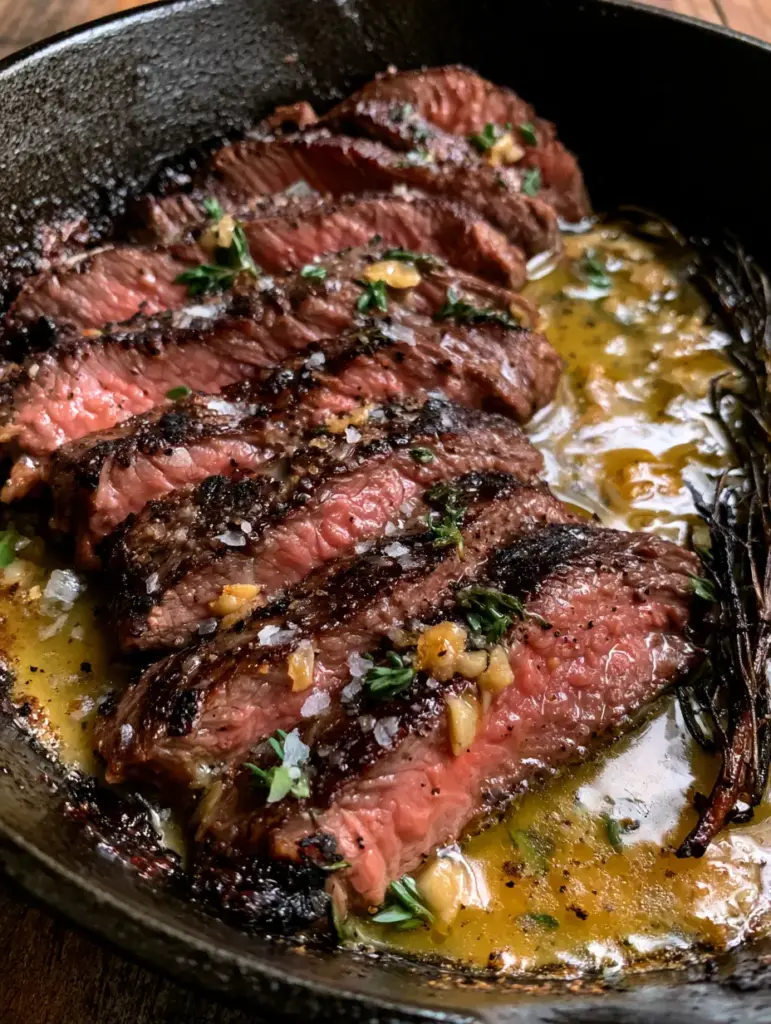
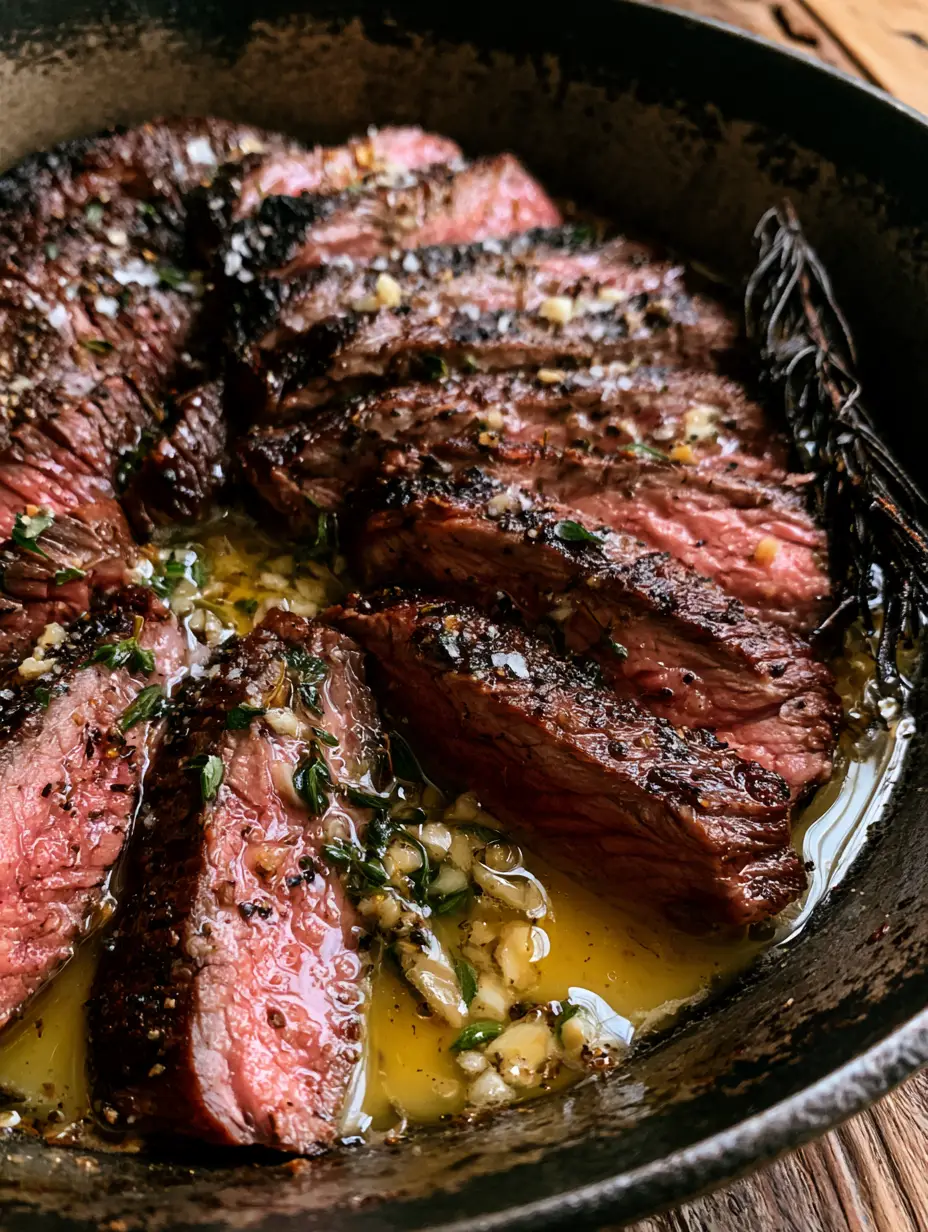
There is nothing quite like the sight of a perfectly prepared flat iron steak recipe hitting a screaming-hot cast iron skillet. Imagine a deep, mahogany charred crust giving way to a warm, tender pink center that melts in your mouth with every bite. This is the ultimate steakhouse experience brought right into your home kitchen, captured in all its glossy, butter-drenched glory.
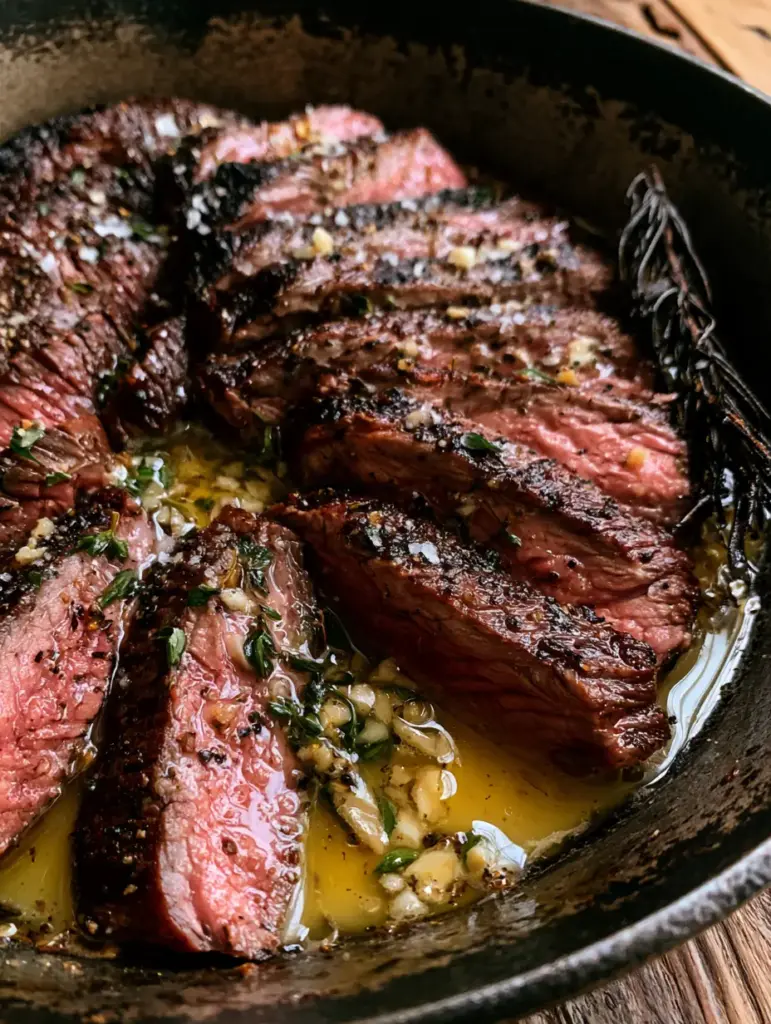
When you look at this dish, your eyes are immediately drawn to the golden pool of melted garlic butter, studded with tiny emerald-green thyme leaves and golden sautéed garlic bits. A single charred sprig of rosemary rests alongside, its aroma mingling with the rich, beefy scent of the seared meat. To finish, a scattered dusting of flaky sea salt and coarse cracked black pepper provides that essential crunch and flavor pop.
Achieving this level of culinary excellence isn’t just about the heat; it is about the technique of butter basting and understanding the unique anatomy of the flat iron cut. Whether you are a seasoned griller or a stovetop enthusiast, this flat iron steak recipe will transform your weeknight dinner into a gourmet event that looks exactly like a high-end food blog photograph.
Why This Seared Flat Iron Steak Recipe Works
- The Maillard Reaction: We utilize a seasoned cast iron skillet to achieve a caramelized dark brown crust that provides intense savory flavor and a satisfying texture.
- Aromatic Butter Basting: By basting the meat in golden garlic butter with fresh thyme and rosemary, we infuse the steak with deep, herbaceous notes while keeping the interior succulent.
- Precision Cooking: We focus on reaching a perfect medium-rare pink center, ensuring the muscle fibers remain tender and juicy rather than tough.
- Visual Presentation: From the minced garlic bits to the charred rosemary sprig, every element is designed to be as visually stunning as it is delicious.
The Essential Components for a Steakhouse Sear
To execute this flat iron steak recipe flawlessly, you need high-quality ingredients that serve both a structural and flavor purpose. Each item on this list plays a vital role in achieving that specific “food blogger” aesthetic and professional taste.
Flat Iron Steak: This cut, taken from the shoulder, is prized for its significant marbling and uniform thickness, making it ideal for high-heat searing. You will need roughly 1.5 lbs (680g) to serve a family of four comfortably.
High Smoke Point Oil: Use 2 tbsp (30ml) of avocado or grapeseed oil. These oils can withstand the intense heat of the cast iron without burning, allowing you to develop that mahogany crust safely.
Unsalted Butter: 4 tbsp (56g) of high-quality butter provides the glossy finish and rich mouthfeel. We use unsalted to have total control over the final sodium levels with our finishing salts.
Fresh Aromatics: You will need 4 cloves of garlic, finely minced, 3-4 sprigs of fresh thyme, and 1 large sprig of rosemary. The thyme leaves provide tiny emerald specks, while the rosemary adds a rustic, charred visual element.
Seasoning Trio: Kosher salt for the initial cure, 1 tsp (2g) of coarse cracked black pepper for heat, and a generous pinch of flaky sea salt for that final, sparkling visual touch.
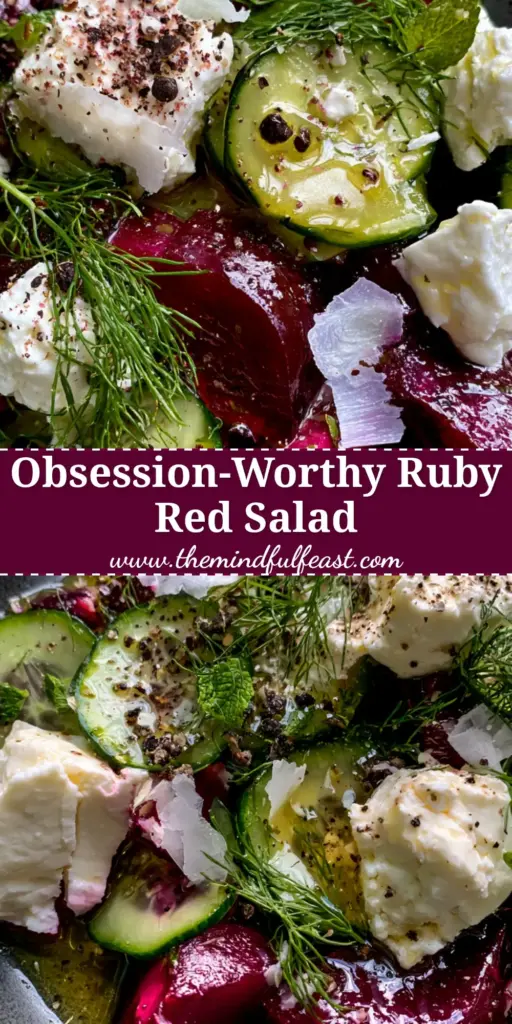
If you are looking for a lighter side to balance this rich protein, consider pairing it with our refreshing beet and cucumber salad. The acidity of the vinegar cuts beautifully through the garlic butter.
Necessary Tools for a Perfect Crust
To replicate the visual blueprint of this flat iron steak recipe, the equipment is just as important as the meat itself. You cannot achieve this specific crust in a non-stick pan.
12-inch Cast Iron Skillet: The heavy bottom and superior heat retention of a seasoned cast iron skillet are non-negotiable for that deep brown char. It allows the steak to sear instantly upon contact.
Stainless Steel Tongs: You need a sturdy pair of tongs to flip the steak and to hold the fat cap against the pan if necessary. Avoid silicone tips, as we are working with very high temperatures.
Digital Meat Thermometer: To guarantee that perfect warm pink medium-rare center, a thermometer is your best friend. Target an internal temperature of 130°F (54°C) before resting.
Small Metal Spoon: This is for the basting process. You need a spoon to continuously ladle the bubbling, garlic-infused butter over the steak slices or the whole steak during the final stages of cooking.
Mastering the Sear: Step-by-Step Instructions
Step 1: Tempering and Pre-Seasoning
Remove your 1.5 lbs (680g) flat iron steak from the refrigerator at least 30 minutes before cooking. Pat the meat completely dry with paper towels; moisture is the enemy of a good crust. Season aggressively on all sides with kosher salt and 1 tsp (2g) of cracked black pepper, pressing the spices into the fibers.
Step 2: High-Heat Searing
Place your cast iron skillet over medium-high heat and add 2 tbsp (30ml) of high-smoke point oil. Wait until the oil is shimmering and just starting to wisps of smoke. Carefully lay the steak into the pan, laying it away from you to avoid splashes. Let it sit undisturbed for 3-4 minutes until a deep mahogany charred crust has formed.
Step 3: The Butter Baste
Flip the steak. Immediately add 4 tbsp (56g) of butter, the 4 cloves of minced garlic, the fresh thyme leaves, and the rosemary sprig to the pan. As the butter melts and begins to foam, tilt the pan slightly and use a spoon to continuously bathe the steak in the hot garlic butter. You should see the garlic bits turning golden and the rosemary sprig beginning to char.
Step 4: Monitoring the Internal Temperature
Continue basting for another 3-4 minutes. Use your digital thermometer to check the thickest part of the steak. For a medium-rare pink center, you are looking for 130°F (54°C). The steak will continue to rise in temperature as it rests. Remove the steak from the pan and place it on a cutting board, pouring the remaining butter and garlic bits over it.
Step 5: The Essential Rest and Slice
Allow the steak to rest for at least 10 minutes. This allows the juices to redistribute, ensuring they stay in the meat rather than running out on the board. Slice the steak against the grain into 1/2-inch (1.25cm) strips. Arrange the slices back in the skillet for serving, ensuring the glossy butter coats every piece. Finish with a generous sprinkle of flaky sea salt.
If you have leftover garlic and steak, they make a phenomenal addition to our beef with pasta in creamy garlic sauce for a quick lunch the next day.
Expert Tips for Success
- Dry the Meat: If the surface of the steak is wet, it will steam rather than sear. Use multiple paper towels to get it bone-dry before it hits the oil.
- Don’t Crowd the Pan: If you are doubling this flat iron steak recipe, cook in batches. Overcrowding drops the pan temperature and ruins the crust.
- Watch the Garlic: Minced garlic can burn quickly. If the garlic bits start to turn dark brown too fast, turn the heat down slightly or move them on top of the steak.
- The Grain Direction: Flat iron steaks have fibers running in one direction. Always slice perpendicular to these fibers to ensure the most tender bite.
Storage, Reheating, and Freezing
While this flat iron steak recipe is best served fresh from the skillet, you can store leftovers in an airtight container in the refrigerator for up to 3 days. To reheat, avoid the microwave as it will turn the medium-rare center gray and rubbery.
Instead, reheat the slices in a pan over low heat with a splash of beef broth or extra butter until just warmed through. For freezing, wrap the cooked and cooled steak tightly in plastic wrap and then foil; it will keep for up to 2 months. Thaw in the refrigerator overnight before reheating.
Creative Pairings for Your Steak Dinner
A rich steak deserves side dishes that can stand up to its bold flavors. While classic mashed potatoes are great, try something more adventurous like our creamy chorizo pasta for a surf-and-turf style feast. The spice of the chorizo complements the garlic butter beautifully.
For those who prefer a bit of sweetness, a side of roasted carrots with a glaze similar to our teriyaki salmon sauce can provide a lovely contrast to the savory beef. And for dessert, nothing cleans the palate better than a light strawberry sago.
Frequently Asked Questions
For this specific recipe, fresh thyme and rosemary are crucial. Dried herbs can burn easily in the high heat of the butter baste and won’t provide the same vibrant ’emerald’ visual or aromatic depth.
While other pans work, a cast iron skillet is highly recommended for this flat iron steak recipe because it retains heat best, which is essential for that deep mahogany crust shown in the photos.
Always slice the flat iron steak against the grain. Look for the direction the muscle fibers are running and cut perpendicular to them to ensure a tender, easy-to-chew bite.
For a perfect warm pink center, pull the steak off the heat when it reaches an internal temperature of 130°F (54°C). It will rise to about 135°F (57°C) as it rests.
Usually, this is because the meat was too wet or the pan wasn’t hot enough. Make sure to pat the steak bone-dry and wait for the oil to shimmer before adding the meat.
The Ultimate Flat Iron Steak Recipe Card
Flat Iron Steak Recipe with Garlic Butter and Fresh Herbs
Ingredients
Equipment
Method
- Remove the steak from the fridge 30 minutes prior to cooking. Pat extremely dry with paper towels.
- Generously season both sides with kosher salt and cracked black pepper.
- Heat oil in a cast iron skillet over medium-high until shimmering. Sear steak for 3-4 minutes until a dark brown crust forms.
- Flip the steak. Add butter, garlic, thyme, and rosemary. Spoon the foaming butter over the meat for 3-4 minutes.
- Remove at 130°F (54°C) and rest for 10 minutes on a cutting board.
Notes
Use a high smoke point oil to avoid bitter flavors from burnt oil.
Bring the Steakhouse Home Tonight
This flat iron steak recipe proves that you don’t need a professional kitchen to achieve world-class results. By focusing on the visual cues—the mahogany crust, the emerald thyme, and the golden garlic—you can create a meal that satisfies all the senses. The combination of high-heat searing and delicate butter basting is a technique you will return to time and time again.
We would love to see your culinary creations! If you made this steak, leave a comment below and let us know how your sear turned out. Don’t forget to share your photos and tag us, and be sure to follow themindfulfeast on Pinterest for more visual recipe inspiration!